Maxem - Smart Charging Algorithm
Product Manager at Maxem · 2022 - 2023
Taking a smart EV charging algorithm from concept to production, unlocking the company's largest enterprise deals.
The Challenge
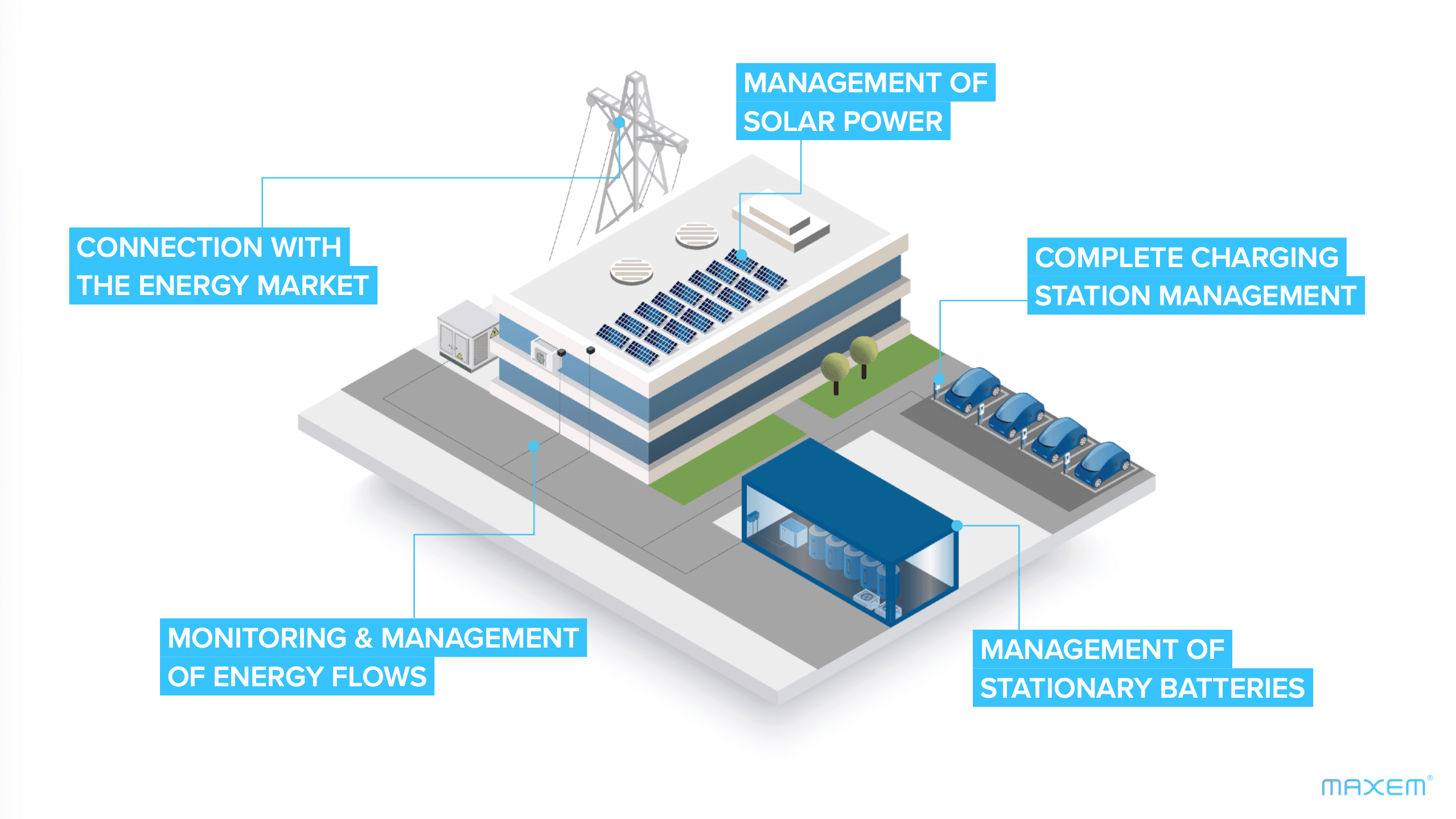
Maxem had a concept for moving EV load balancing intelligence from hardware to cloud, but nothing was developed. The stakes were high: if the algorithm failed, client EVs wouldn't charge, disrupting logistics operations. No competitor offered a flexible, hardware-agnostic solution that could optimize charging based on solar production, battery storage, and energy prices.
My Approach
De-risking Framework
Adopted Technology Readiness Levels (TRL) to structure validation: from concept testing through simulator scenarios, lab hardware tests, field tests at client locations, monitored early customers, to full commercial deployment. Each phase went through the full cycle before progressing.
Enterprise Stakeholder Research
Worked with flagship projects (Watthub—world's largest truck charging station; CTPark Amsterdam—major logistics hub) revealing complex stakeholder maps. Discovered hidden requirements like time-variable grid limits that reshaped the product scope.
Architecture Decision
Evaluated cloud-only (smart but unsafe, 30s response time), local-only (safe but dumb), and hybrid approaches. Chose hybrid: cloud handles intelligence and optimization, simplified local device handles safety with 1-second response time. If overload detected, it reduces charging immediately—independent of cloud state.
Phased Delivery
Structured delivery in 6 phases of increasing complexity: socket balancing, location balancing, solar charging, optimized solar with driver priorities, battery storage integration, and virtual power plant. Implemented through Phase 5 during my tenure.
Key Decisions
- →Chose hybrid cloud-local architecture over pure cloud. Cloud intelligence with local safety fallback gave enterprise clients the reliability guarantees they needed for logistics-critical operations.
- →Adopted TRL framework for a safety-critical product. When algorithm failure means EVs don't charge and logistics stops, structured de-risking prevented shipping something that could damage client operations and our reputation.
- →Built the algorithm simulator as a multi-purpose tool. What started as TRL 3 testing became an internal testing asset, UX concept demo for asset managers, and sales demonstration tool.
- →Launched with "still in testing" status and close monitoring (TRL 8). Transparency built customer confidence—they appreciated being partners in validation rather than guinea pigs.
- →Evolved pricing from charger count to algorithm complexity tiers. As capabilities grew, tiers created natural upgrade paths and better upsale conversations with existing partners.
Results
The smart charging capability became the key differentiator in enterprise sales, unlocking the largest deals of the year and enabling a new pricing strategy based on algorithm complexity tiers.
Revenue Growth
2x
Year-over-year (2022-2023)
Charging Points Growth
2x
Year-over-year (2022-2023)
Enterprise Deals
4+
DHL, Watthub, CTPark, Schiphol
Key Learnings
- ✓Align stakeholders early in multi-party projects. Being a subcontractor of subcontractors caused misunderstandings about technology readiness. Push for all stakeholders to meet from the beginning—dependencies and requirements need to be visible to everyone.
- ✓TRL framework pays off for critical features. The discipline of structured validation stages prevented us from shipping prematurely. Each phase built confidence in the next, and the simulator became a reusable asset across testing, demos, and UX design.
- ✓Hybrid beats either/or. The cloud-only vs. local-only debate resolved into a solution better than both. Sometimes the right answer isn't choosing between options but combining their strengths.
- ✓Multi-purpose tools multiply value. The simulator built for testing became an internal QA tool, an asset manager configuration demo, and a sales asset. Building tools that serve multiple purposes compounds their ROI.
Tech Stack
Links
Have questions about this project or want to know more?
Ask the AI Assistant