RatedPower - Topography Tool
Product Manager at RatedPower · 2019 - 2021
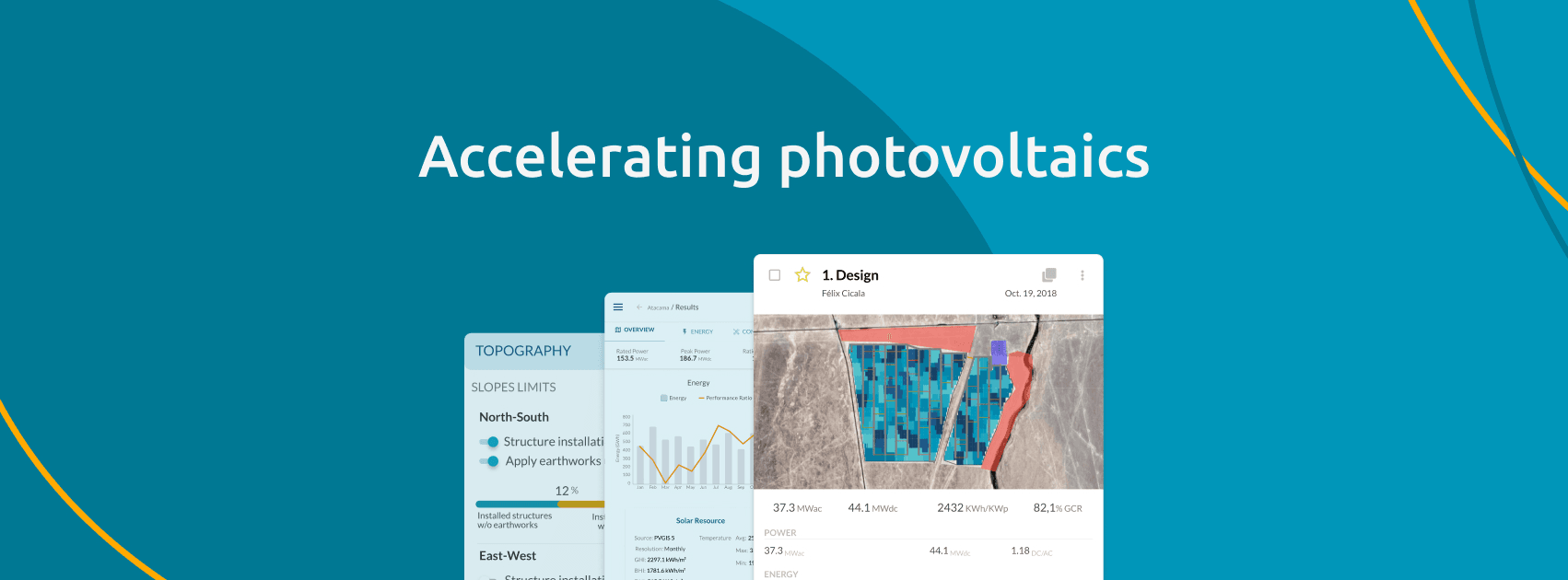
Automated terrain analysis and earthwork calculations that won back customers from competitors.
The Challenge
Solar plants are built on terrain with significant slopes, and each structure type has limits to how much slope it can handle. We only provided a slope heat map with 30m precision, leaving users to manually guess which areas were buildable. They excluded potentially usable land out of risk aversion, with no way to validate their assumptions. Competitors like PVCase already offered topography validation, and we were losing deals specifically because of this gap.
My Approach
Feedback Pipeline
Built a structured feedback pipeline used by Sales and CS to classify customer requests, tracking which companies requested what and linking requests to lost deals. This feature surfaced at the top, we could trace specific deals lost to PVCase because of this capability gap.
Client Discovery
Joined customer calls with Sales and CS to hear frustration firsthand. Contacted clients who had requested the feature to understand their current painful workflows. Maintained a group of 4-5 power users for ongoing validation.
Technical Definition
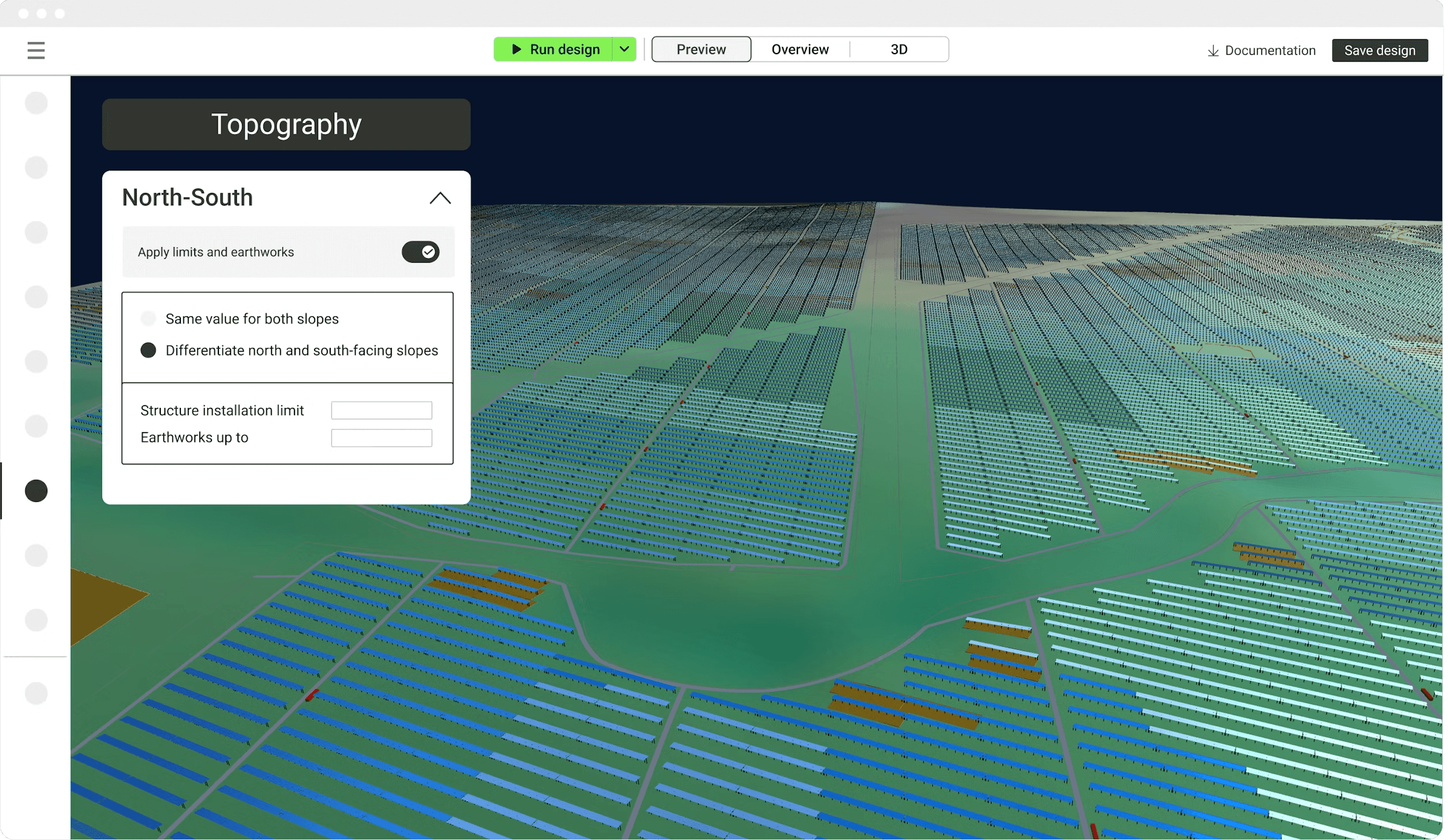
Leveraged my civil engineering background to go deep: tested competitor tools, obtained internal Excel/AutoCAD tools from former colleagues, and mapped the full solution landscape. Defined a phased approach with the engineering team: custom topography upload, structure restriction validation, then earthwork calculations.
Phased Delivery & Iteration
Shipped in 3 phases over ~6 months, validating with real users between releases. Each phase built on validated learning: from NNI interpolation tuning, to custom placement algorithms, to earthwork accuracy benchmarking at 90%. Shared progress with power users continuously to confirm direction before investing further.
Key Decisions
- →Chose 90% accuracy with fast computation over 99% accuracy that would take 10x longer to build. Our users needed confidence for preliminary design, not perfection, matching the phase of their workflow where speed matters more than precision.
- →Standardized on CSV/XYZ files only, rejecting CAD file support despite client requests. CAD files varied wildly in formatting, supporting them would have delayed launch significantly while solving an edge case most topographers could work around.
- →Added CAD profile drawings as output, something no competitor offered. The algorithm naturally produced this data, so with minimal extra effort we turned feature parity into competitive advantage.
- →Shipped in 3 phases rather than waiting for the complete solution. Each release validated our technical approach with real users before investing in the next layer of complexity.
- →Decided not to model earthwork interactions between adjacent structures. The accuracy gain didn't justify the computational cost or development time for preliminary design use cases.
Results
This feature directly addressed our biggest competitive gap. After launch, we won back customers who had chosen PVCase the previous year, and shifted RatedPower's market perception from 'early design tool' to a more sophisticated platform developers could use without hiring an engineer for early stages.
ARR Growth
x4
Year of feature launch (2019-2020)
Competitive Wins
5+
Won back clients who had left
Processing Time
x10
Automated manual workflows
Key Learnings
- ✓Structured feedback pipelines transform prioritization from gut feel to evidence. Tracking which companies requested what, and linking to lost deals, gave us undeniable data to prioritize this feature over competing roadmap items.
- ✓Domain knowledge compounds. My civil engineering background and PV construction experience accelerated discovery, helped me speak credibly with technical users, and let me evaluate solutions without depending entirely on engineering.
- ✓Customer Success is a product superpower. Their direct line to customer pain points and their own engineering expertise made them invaluable partners throughout discovery, validation, and iteration.
- ✓Phased delivery de-risks complex features. Shipping in 3 releases let us validate our technical approach with real users between phases, building confidence before investing in the next layer of complexity.
Tech Stack
Links
Have questions about this project or want to know more?
Ask the AI Assistant